From notebook 02 of Father Eustáquio
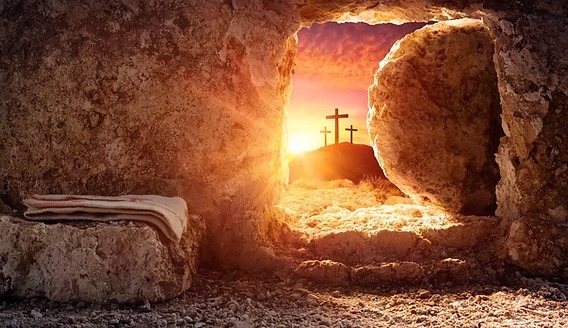
Just a few days ago, the Holy Church, shrouded in the dark mantle of mourning, consternation, and sorrow, bitterly wept for the death of the Author of life. Today, religion, adorned in festive finery on its altars, clothed in its brilliant splendor, announces the joy and contentment of the entire universe, as the Redeemer of the world has risen from the mournful field. It is in the order of nature that every triumph in this world ends in the grave, that all brilliance and splendor vanish with death; but the triumph, the brilliance, the splendor of Jesus Christ begin where that of the world ends.
Was His life not one of contempt, without esteem? And did He not always find more people to insult Him than to honor Him? What splendor did His death have? Was His death not the death of a condemned man, and the cross, until then, an infamous piece of wood? But from the sepulchre, from which rot and stench usually emanate, that of Jesus Christ exhaled aroma and sweetness; it was surrounded on all sides by splendor and magnificence. There is more sign of life than of death; it seems more like the cradle from which new life springs than the sepulchre from which death still comes to meet us from afar.
Here there is no sadness, only joy; no weeping, only songs of jubilation and rejoicing. We show Jesus, during Holy Week, in his goodness and great love for humankind; on the day of his Resurrection, He proves his omnipotence to us. The miracles performed by Jesus in his life are stupendous: he gave sight to the blind, voice to the mute, walking to the paralyzed, hearing to the deaf, even life to the dead. But to give life in this way, after death, is a miracle that surpasses all others, surpasses them in splendor, surpasses them in proof, surpasses them in the manifestation of the divinity of Jesus Christ.
It is this great miracle that, throughout the ages, has made the faith acceptable, has confirmed Christianity, has authenticated the Gospel, has been the teaching of the simple, has converted the unbelievers, has sanctified sinners, consoled the righteous, opened Heaven, exalted humanity, and, finally, transformed the face of the universe. Blessed, therefore, be the time, the day, and the hour in which this great and holy miracle was performed. Facing this mystery, then, let us heed the holy warning of the Gospel: “Put off the old self and put on the new self.”
From the old man, who was more lukewarm than fervent, who preferred bad company to good, who preferred sin to virtue; who sought the world more than God; the old man who always considers himself strong enough to serve the world and always too weak to serve God. The Gospel tells us we must strip ourselves of this man and clothe ourselves in the new man: who never tires in the service of God; who does not seek his triumphs in the world; who desires no other path than that of the Holy Cross; who hopes for no other happiness than eternal happiness; who never loses heart, neither in life nor in death; whose unwavering faith and infinite hope are always with Jesus—and with the Risen Jesus.
 Português do Brasil
  English
  Español