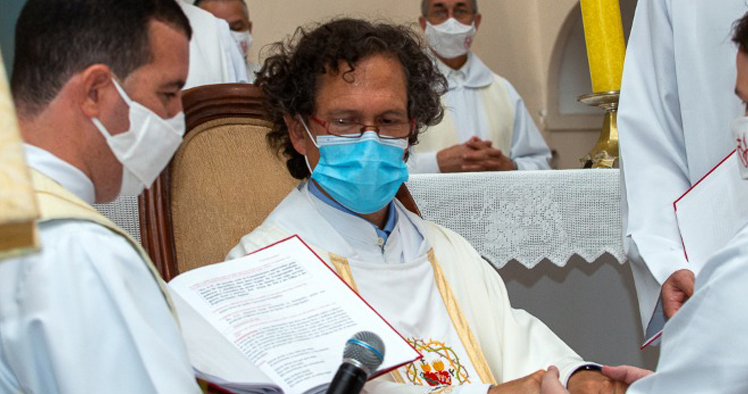
The Superior General of the Congregation of the Sacred Hearts, Fr. Alberto Toutin, ss.cc., sent a letter to his brothers and sisters in the congregation. Entitled "Children of God's Promises," the document is dedicated to consecrated members, but it also applies to lay men and women throughout the world.
Below is the letter translated into Portuguese in its entirety. Read and reflect with us:
Dear brothers and sisters,
You will receive this letter near the Feast of the Presentation of the Lord in the Temple in Jerusalem. This feast is also associated with the feast of religious life. An occasion to thank God, together with the Church, for the gift of vocation and service as religious men and women in the Congregation.
The passage from Luke (Lk 2:22-39) about the presentation can offer us some keys to understanding our current religious journey. I invite you to focus your attention on Simeon and Anna. Both are in an attitude of fervent expectation, for the consolation of Israel, for the redemption of Jerusalem. An expectation that unites them to the great promises of God and to the path of a people, Israel, to the destiny of a city, Jerusalem. However, this people and this city carry within themselves a universal vocation and are open to God's time and to the fulfillment of his promises of justice and peace, through the coming of the anointed one, the Christ of God, for all peoples. Both nourish their hope in the piety lived alongside the people of God who journey to the Temple in Jerusalem. Once again, the temple extends in the footsteps of the people of God who journey through history.
A fervent expectation of the promises.
Furthermore, the text gives us some characteristics of who Simeon and Anna are and how in each one the ardent expectation of God's promises for his people is expressed. Simeon is a just and devout man, observant of the prescriptions of God's Law and familiar with the Spirit of God, with its movements and appeals, available to be guided by it. Anna, in turn, appears as an elderly woman who lived seven years with her husband and then became a widow. The emptiness left by her husband's death and the mourning do not close her off from herself; on the contrary. As the years pass, she places herself at the disposal of God and her time. As a prophetess, she seeks to be in tune with God's ever-new ways, placing herself at his service in the temple and preparing to meet him through fasting and prayer. As if her prayers and fasts marked on her own body the expectation of one who is greater than the temple and who does not abandon his people.
On the other hand, Simeon and Anna inhabit the practices and rites that give identity to the people of Israel and, at the same time, cultivate openness to the unprecedented and unpredictable nature of God, which goes beyond their borders. Thus, Simeon, seeing these parents arrive who, observing the Law, present their son to the Lord, recognizes in this son the fulfillment of God's promises, the consolation for Israel and the light for all nations. For them to recognize in this child the anointed of God, the fulfillment of His promises to God enters into the long periods of human learning. These learnings, which mature secretly in the heart like those of Simeon, seek the signs that God gives and, when recognized, life, its mysteries, its contradictions, and the long wait, achieve their meaning. And there are also those learnings that are made through falls, stumbles, and even pains that are not forgotten. This is what Simeon reveals to Mary: Israel will know the paths that God has prepared for his people when they overcome their own contradictions and rise from their stumbling blocks. Mary herself will not fully know her Son until she participates in this other birth, when she sees her Son die on the cross, and when she welcomes those who believe in him in his boundless love.
Hannah, in turn, praises God's action on behalf of his people, seeing this child. The emptiness of her widowhood, her fasts and prayers gain meaning when she finds him. In him, the redemption of Israel is already taking place. Her eyes intuit in faith what God will do with this child; his promises are already being fulfilled in the steps, groans, growth, and learning of this child.
God never ceases to amaze us with the way He fulfills His promises. This child was entrusted to the care of his parents and to the recognition of faith by Simeon and Anna.
Children of hope in God
The uncertain times we live in due to the pandemic and its often dramatic consequences call us, as religious men and women, to be children of hope in God who does not abandon his people. Like Simeon and Anna, we need to attune ourselves more to God's great promises of peace and justice for all nations, making our own the desires for a dignified life for all who cross our world. Shouldn't our faith in Jesus compel us to remain vigilant and attentive to the signs of God's comforting presence, and ready to care for his manifestations and accompany his accomplishments, often fragile and small like the child Jesus presented in the Temple? The true “nunc dimittis” The true meaning of religious life is that which will emerge when our eyes also see the salvation that God continues to prepare amidst our falls and resurgences, and the pains that may pass through our souls and the souls of so many brothers and sisters.
In this sense, it is moving to see how attentive our founders were to God's action in each brother and sister of the Congregation. Despite the timidity and discouragement that the Good Father blamed himself for, and his constant concern for the fragile health of some brothers and sisters, he tenderly observes the progress of the religious family in the three years that have passed since the first commitments of its members (October 20, 1800, feast of Saint Caprasius). He gives thanks for the difficulties through which the Lord made them participants in his cup. In a special way, he gives thanks that God entrusted the care of this family, God's work, to the Good Mother – the Little Peace – along with him: “"It is true that Little Peace carries the light, and I do nothing but be the lamp."” (Letter to Sr. Gabriela de la Barre, October 20, 1803).
Walking together, the two are ready for God to do his work in them, making the Good Mother a sign of God's Peace, transforming the Good Father's timidity into solicitude and attention towards his brothers and sisters. With this certainty, the Good Father then renews his most essential vow to accompany God's action in his brothers and sisters, preparing them to venture forth with confidence on their paths and to serenely face their challenges: “But today I renew my resolutions to lead you all forward, by my example, to all kinds of sacrifices that can give glory to our Good Master” (Letter to Sister Gabriela de la Barre, October 20, 1803).
May the Lord Jesus, on this feast of the Presentation, make us all sons and daughters of God's promises and renew us in the most essential vow to care for His work in every man and woman, our brothers and sisters, in His Church and in creation.
Fraternally,
Fr. Alberto Toutin, ss.cc. – Superior General
 Português do Brasil
  English
  Español