History

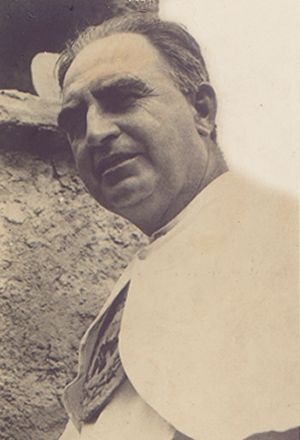
Father Eustáquio's presence remains alive and present in the hearts of many who knew him or have come close to his witness and his work. His tomb in Belo Horizonte, in the new Memorial Shrine of Health and Peace, continues to attract large numbers of people every day. Children, teenagers and young students, before or after going to the schools that bear his name, kneel or make a hasty sign of the cross saluting their beloved patron.

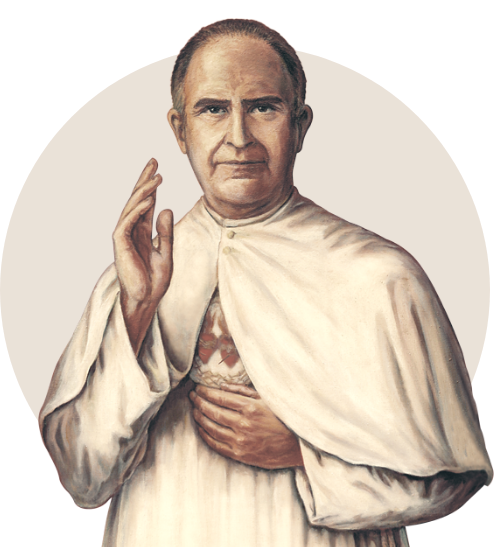
In Belo Horizonte, in the shops and in many homes, we find his picture with that clear, firm and penetrating gaze. Grateful for the many graces they have received, parents honor the Blessed by naming their children Eustáquio, Eustáquia and many compounds such as Humberto Eustáquio, José Eustáquio, Maria Eustáquia, among many others. His living message expresses attention to the sick and the poor as the hallmark of a whole life lived following Jesus. A life of consecration to the Sacred Hearts of Jesus and Mary through daily adoration of Jesus in the Eucharist, thus nourishing its missionary ideal and communicating what it knows and experiences: God is Love! Fathers and mothers, or the sick and suffering all: the unemployed, people in need, but always full of faith, hope and gratitude cry out:

“Pray for us, Father Eustáquio, watch over us with love. We trust in your goodness, our intercessor with God.”

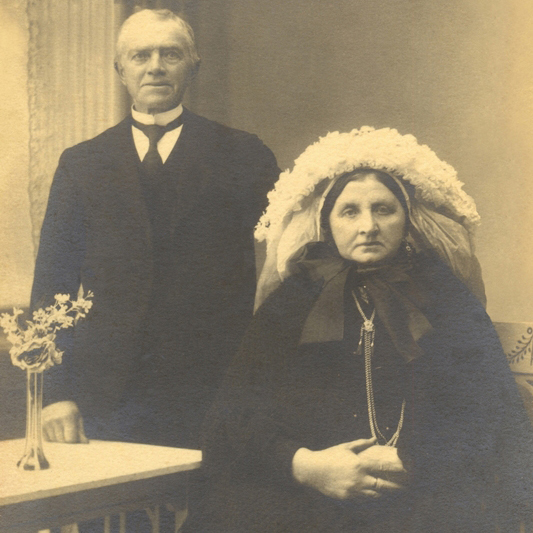
The Family of Mr. Guilherme and Mrs. Elizabete

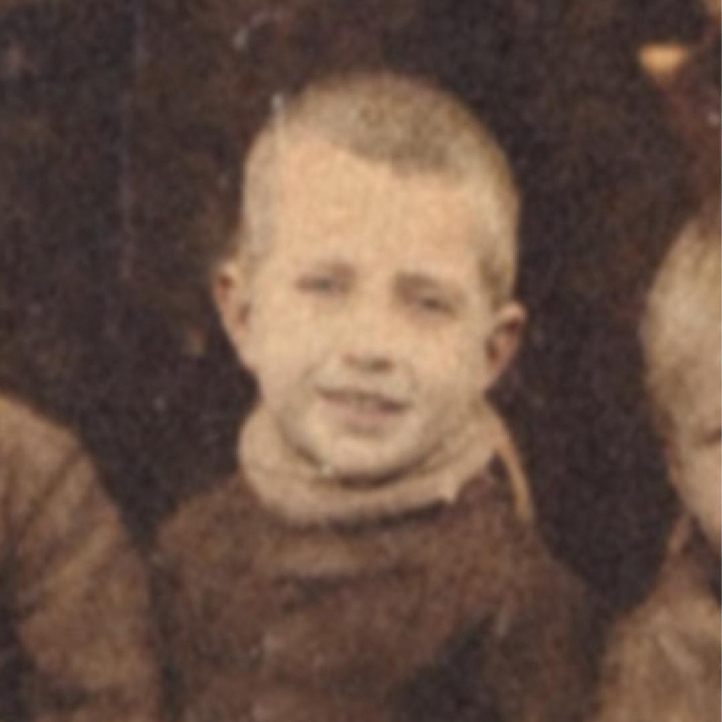
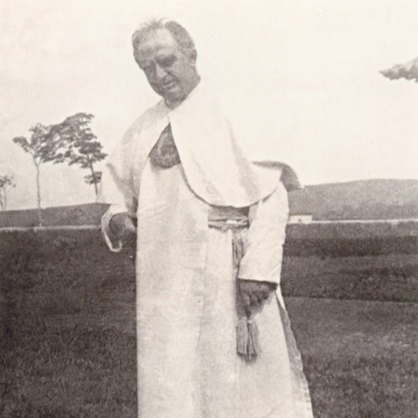
Father Eustáquio van Lieshout was born in Holland in 1890. A large and very religious family. Of the nine children, in addition to Father Eustáquio, two of his sisters also followed a religious vocation. His parents were Mr. Guilherme and Mrs. Elizabete.


He was baptized on the same day he was born. In 1901, he received his First Communion and was confirmed in 1904. Nearing his 15th birthday in 1905, he entered the seminary of the Congregation of the Sacred Hearts

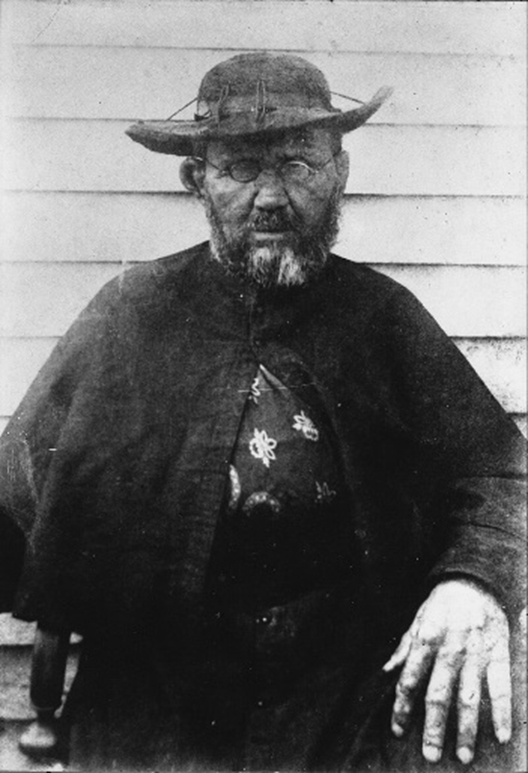
St. Damien inspires his missionary ideal

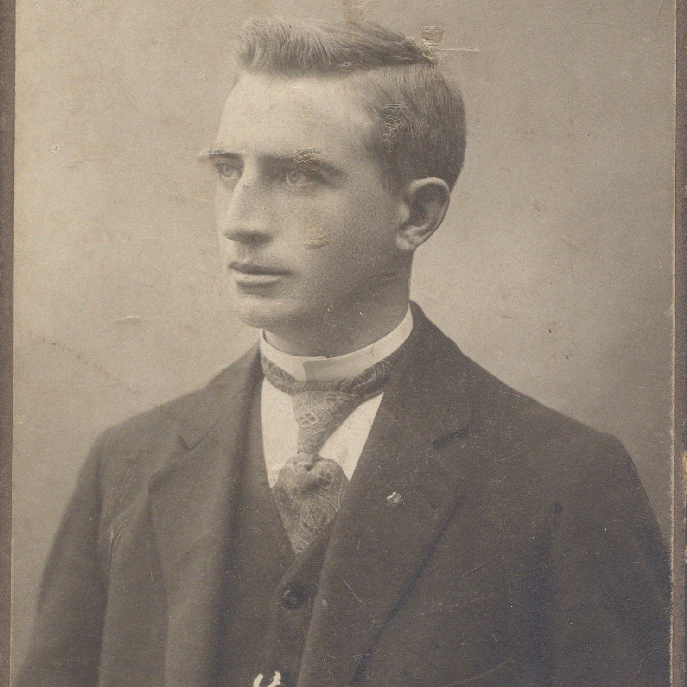
The youth of his region were impressed by the heroic witness of their fellow countryman from the Brabant region, which is divided between the south of Holland and the north of Belgium. The family homes of the two missionaries are just over 110 km apart. From an early age, the future Father Eustáquio was familiar with his adventures and heroism, but as a teenager, reading the life of St. Damien of Molokai enchanted him so much that from then on his great dream was to be a missionary like the “apostle to the lepers”. In 1915, the young Eustace professed the Vows of Poverty, Chastity and Obedience, becoming a religious of the Sacred Hearts like his hero: St. Damien of Molokai. In 1919, he was ordained a priest. He served the People of God in Holland in various missions. He distinguished himself to such an extent that he received a commendation from the King of Belgium for his services to Belgian refugees during the First World War.

Father Eustáquio, Missionary

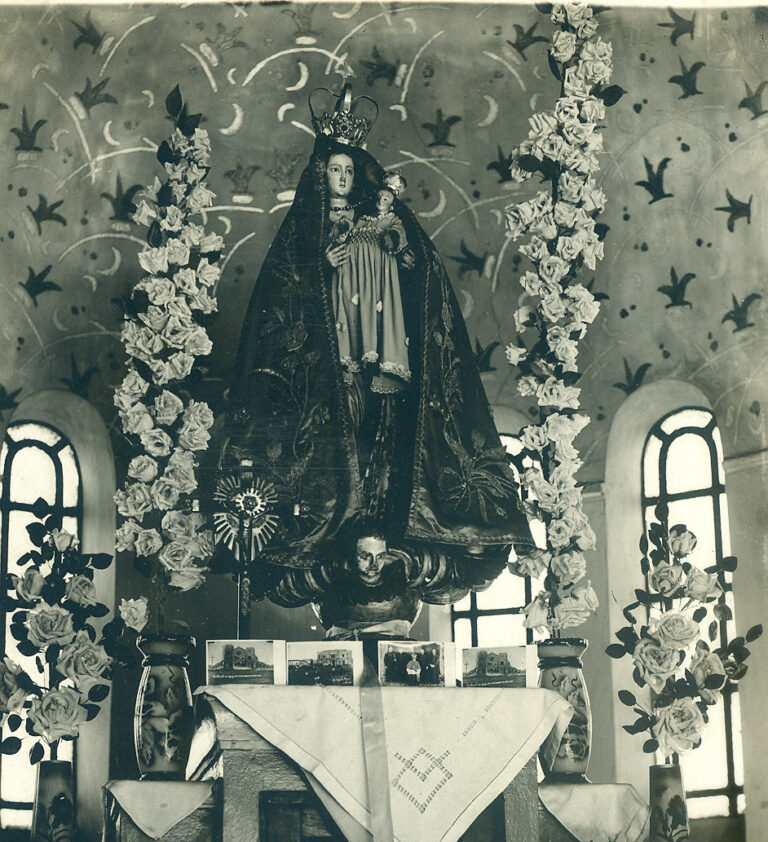
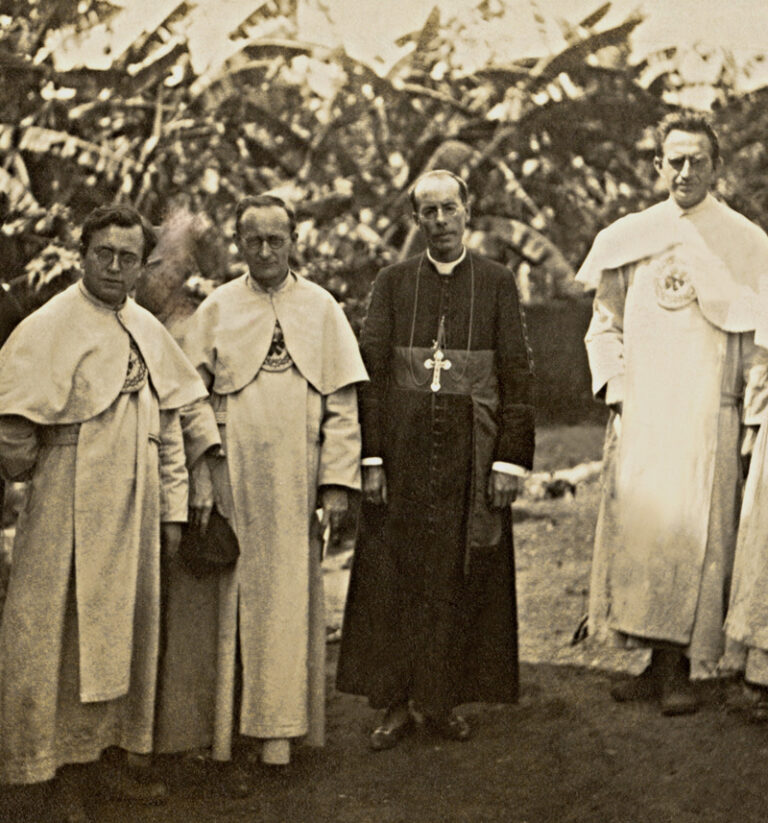
In 1925, his missionary ideal was realized. He was one of the three founders of the first community of the Congregation of the Sacred Hearts in Brazil, in Romaria, in Triângulo Mineiro. From 1925, the first three religious of the Sacred Hearts settled in the towns that at that time belonged to the then Diocese of Uberaba: Father Gil van den Boogaart, Father Matias van Rooy and Father Eustáquio van Lieshout, who was the first parish priest and builder of the new Shrine of Our Lady of the Abbey of Água Suja, in the present-day town of Romaria-MG. In 1926, they founded the Regina Pacis School, in Araguari-MG, and in 1927 the Dom Lustosa Secondary School, in Patrocínio-MG. The first directors were Fathers Gil and Matias respectively.

Help us, Lady of the Abbey!

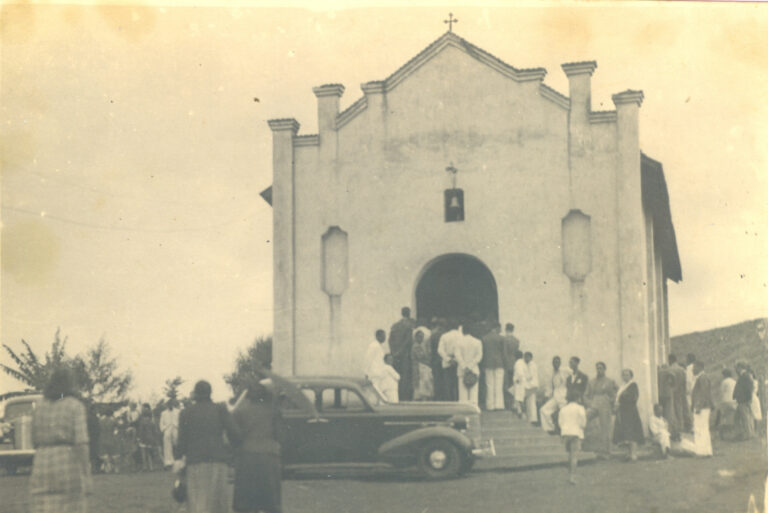
Father Eustáquio lived in Romaria-MG from 1925 until 1935, also serving the parishes of Indianópolis-MG and Iraí de Minas-MG. He built the current Shrine of Our Lady of Abadia da Água Suja, and was transferred to São Paulo under protest from his parishioners. The parish priest was held in such high esteem among his faithful that when he was transferred, they besieged the parish house and blocked the town's roads by tearing out the cattle guards. Even so, in order to fulfill the new obedience he had received, he set off on foot until he crossed the boundaries of Água Suja.

The Vicar of Poá

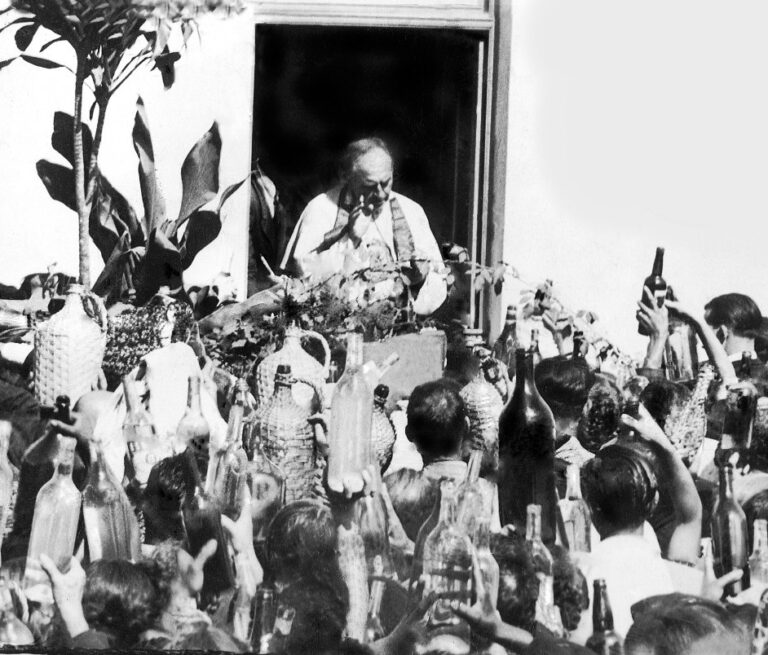
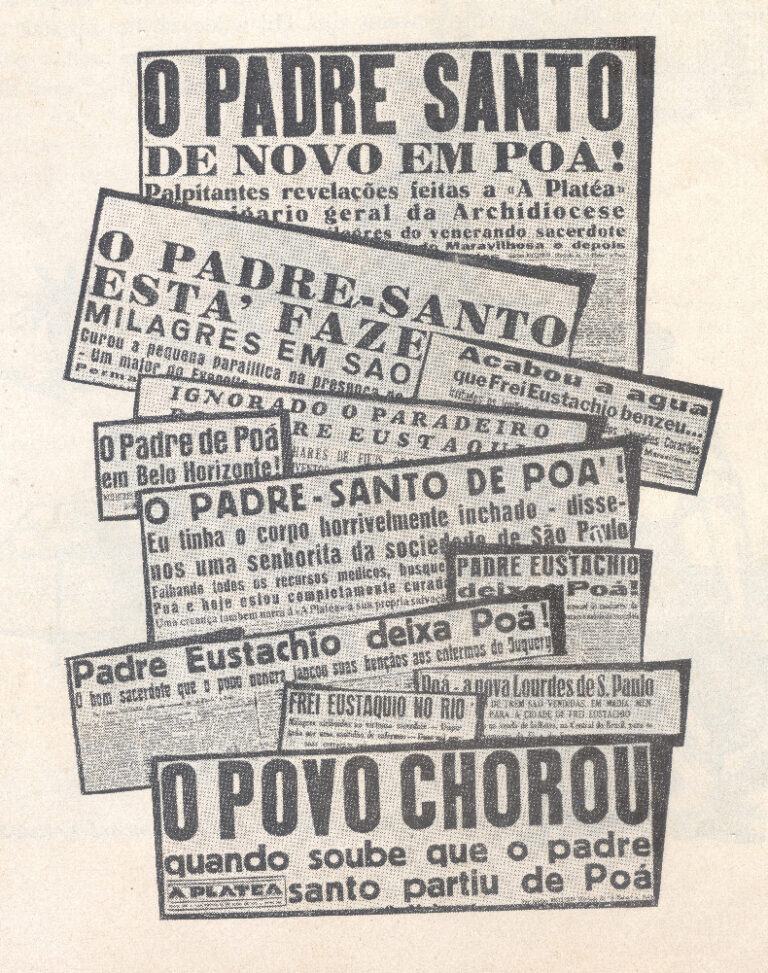
Father Eustáquio was parish priest in Poá-SP from 1935 to 1941 in the parish of Our Lady of Lourdes. Like Jesus, the Good Shepherd, he gave his life for his parishioners: a special affection for the sick and suffering. He built a grotto in honor of Our Lady of Lourdes and provided holy water mixed with water that he himself had brought from France on his pilgrimage to Lourdes during his vacations in Holland in 1935. Father Venâncio Hulselmans, SS.CC., his companion and first biographer, recounts in his 1944 book “O Vigário de Poá” (The Vicar of Poá) that “the parish work continues with the greatest regularity, because the pilgrims were only looking for holy water and nothing else. Father Eustáquio comes and goes without the slightest difficulty; he goes with the parishioners to Aparecida do Norte, takes them as usual, to adoration at the Church of Saint Iphigenia, in short, he does everything he used to do, without attracting any special attention. Gradually, however, with the growing fame of the water, which brought health wherever it was used, the pilgrims no longer contented themselves with taking the water, but wanted to see the priest, talk to him, ask him personally for a blessing, both for themselves and for the water. Kind by nature, Father Eustáquio attended to one and other in the drawing room. The stories of illness and misfortune he heard moved his always compassionate heart and, consoling and comforting, he always ended with a personal blessing, advising the use of the holy water.” In Poá-SP, there were reports of “miraculous” healings that caused a huge influx of people. The small town couldn't cope with the large number of faithful who came to see him every day. In the same book by Fr. Venâncio, we can find “a quick collection of ‘cures’ sent by beneficiaries to Excelsior Radio in São Paulo:

1) Eu tinha uma ferida na perna muito difícil de sarar, já tinha um ano e me doía muito. Eu já tinho ido ao médico e já tinha posto muitos remédios. Mas Deus me ajudou e eu ouvi falar nesse querido padre de Poá, levantei de madrugada e fui tomar o primeiro trem que para lá ia. Era cinco e meia da tarde e ainda não tinha chegado o meu número, era de 10.000. Às seis horas eu entrei e ele disse: lave com esta água e reze a S. José. Vi instantaneamente um grande milagre, gritei a todos de minha casa para que vissem o grande milagre recebido de Padre Eustáquio, com a vontade de Deus.
Exile

The solution found by his superiors was to remove him from the parish from May 13, 1941. The civil and religious authorities ordered his exile to a farm in the city of Rio Claro-SP, and the change of his name to Father José, which he accepted in obedience and humility. Once again he was discovered, the farm, invaded by hundreds of people, and the situation became increasingly difficult. Discovered, he began a pilgrimage to various places such as Campinas-SP, Rio de Janeiro-RJ, and São Paulo-SP. His charisma and gifts, the strong call to conversion, his courageous preaching and the ritual blessings of healing attracted crowds. “The Vicar of Poá's” reputation for holiness spread throughout the country. The uncontrollable situation even became a public health and safety problem wherever he went.

Patrocínio and Ibiá

Father Eustáquio was banned from all the major centers in Brazil. He could live in one of the Congregation's houses in the countryside. His refuge became the priests' convent in Patrocínio-MG, at the then D. Lustosa Secondary School, from October 13, 1941. The chapel of Saint Lucy was his field of work, but with serious restrictions. Attendance and blessings were only in the confessional, where he spent seven to eight hours a day. Without complaint, Father Eustáquio accepted all the conditions. In Patrocínio, he experienced a new spirit. But he only stayed there for four months, from October 1941 to February 1942. He himself wrote in December 1941:

“I went to the retreat and I was fortunate to be able to care intensely for my own soul and to recommend in a special way the intentions that so many people ask me for. Thanks to the good Lord, every day I see some conversions. People who, for years and years, lived far away from God and the Church, I see returning to the arms of our Divine Master. How shall the Heart of Jesus overflow with joy! And I feel no less happy with so many spiritual resurrections. Winning souls, relieving pain and suffering, that is my great ideal, inspired by God!”

The Congregation of the Sacred Hearts was called to take on a new mission. The superior, Father Gil, believed that the new mission required someone like Father Eustáquio and appointed him to Belo Horizonte-MG as parish priest. Before leaving for the capital of Minas Gerais, he was sent as a temporary parish priest to the town of Ibiá-MG, where he didn't even spend two months, but he planted the project for the Holy House that today bears his name. After his arrival in Ibiá, the whole of Araxá, São Gotardo, Campos Altos, Tiros, Pratinha... came looking for him.

Belo Horizonte

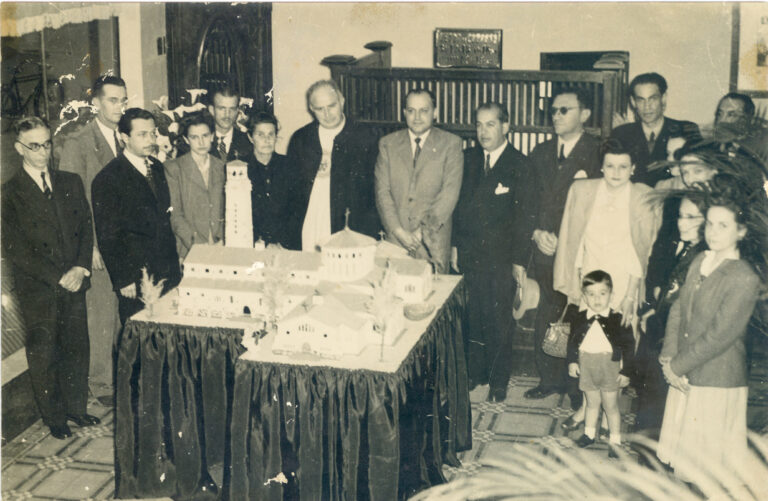
Welcomed by Archbishop Antônio Cabral, he arrived in Belo Horizonte on April 7, 1942. In May 1943, he presented the model of the future Church of the Sacred Hearts to the community. It was only 16 months of intense apostolate from the chapel of Christ the King, in the old parish of São Domingos, the future parish of the Sacred Hearts. The demand from the people was three times greater than the chapel's capacity. In order to organize the event, it was necessary to distribute tickets using a numbered card.

“Father Eustáquio went to Belo Horizonte as a reject, nobody knew where to put Father Eustáquio. He went to Belo Horizonte with the obligation not to work miracles.For God there is no such thing. He did work them... changed street names, neighborhood names, church names, everything... see what a person marked by God is like! Father Eustáquio, with his 'Health and Peace', reached every family, from JK (Juscelino Kubitschek, then mayor) to the simplest and poorest of Christians”.

Missionary of Health and Peace

In addition to his own parish, he was called everywhere, and in those scant 16 months in Belo Horizonte we yet have news of his visits to so many neighborhoods and cities: Santa Tereza, Capela Maria Auxiliadora, O Diário newspaper, Lagoinha, Barro Preto, Floresta, Nova Lima, Itaúna, Montes Claros, Calafate, Colégio Imaculada, Instituto São Rafael, Catedral da Boa Viagem, Pedro Leopoldo, Engenho Nogueira, Bento Pires, Colégio Arnaldo, Patrocínio, Santa Casa, Instituto dos Industriários, Sanatório Minas Gerais, Renascença, Igreja de Lourdes, Colégio São Pascoal, Companhia Força e Luz, Colégio Sagrado Coração de Jesus...

Unexpected Illness

A sudden high fever interrupted his intense apostolate for a week. On August 30, 1943, he died of exanthematic typhus or spotted fever, also known as tick fever.

Popular recognition and gratitude

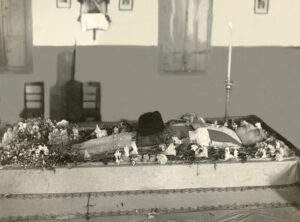
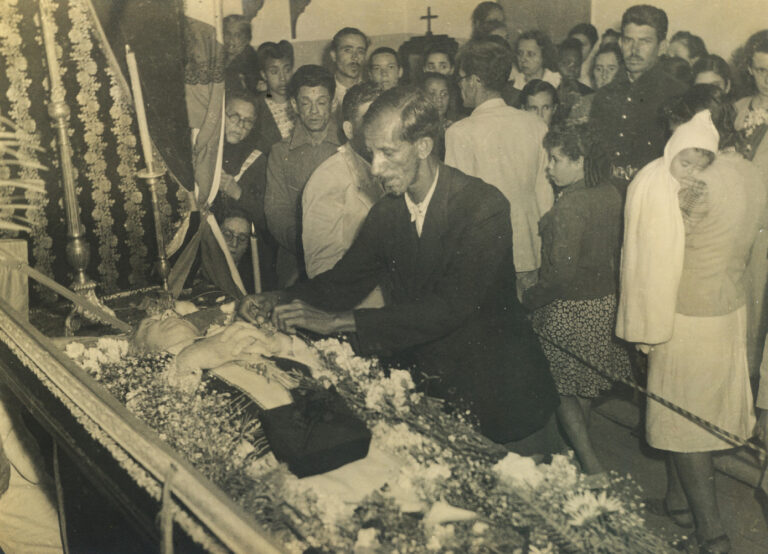
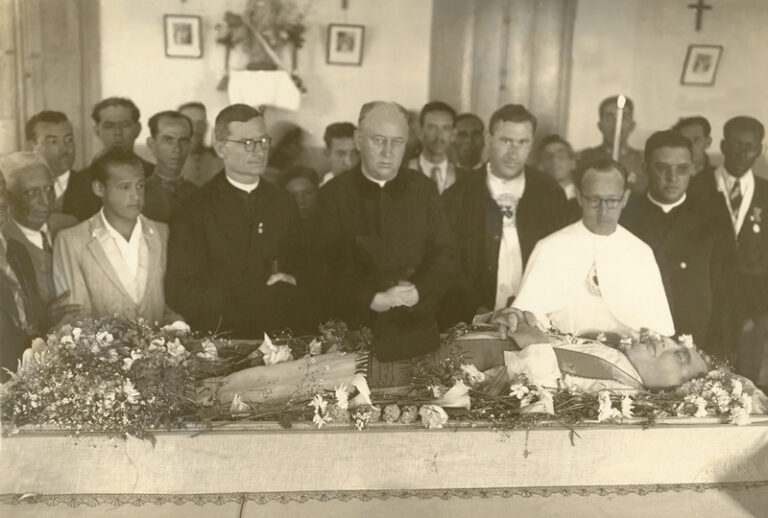
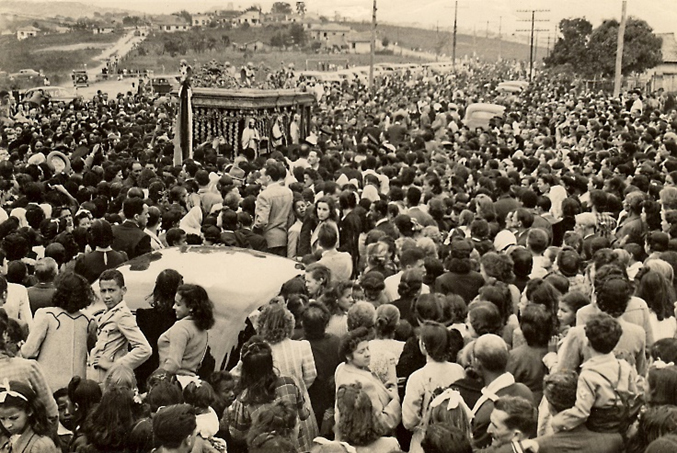
His funeral was a veritable triumphal march. The burial was the beginning of an apotheosis. His tomb in Bonfim Cemetery continued to be visited by the faithful. A constant pilgrimage to his tomb and the construction of the church he designed began immediately. In the 'Livro de Tombo' (heritage book) of the Mother Church of the Sacred Hearts one can read the annotation of August 30, 1944:

first “anniversary of the death of Father Eustáquio, the first vicar of the Sacred Hearts parish. Three Masses were celebrated for his soul, attended by thousands of people. The people spontaneously went in large masses to the Bonfim cemetery where his remains are located. The priests, in accordance with the Archbishop's wishes, did not organize a pilgrimage. ”

The construction of the Church of the Sacred Hearts became a reality and the people affectionately began to call it “Father Eustáquio's” church. Once part of the church's construction was finished, the religious's remains were exhumed and transferred to a tomb inside the church in January 1949.

Later, in 2007, a beautiful memorial was built as an annex to the church. In the center is the tomb with Father Eustáquio's relics and the stained glass windows depict moments from his life and history. The place has become a point of reference for devotees. In 2014, the church built by the priest was elevated to Sanctuary of Health and Peace by the Metropolitan Archbishop of Belo Horizonte, Walmor Oliveira de Azevedo.