
How do you spend your time each day? Is your life filled with prayer and work, with total dedication to your brothers and sisters, or is it a life without time to deal with the things of God?
Our sanctification before God will not come through great deeds, but through the small work of our daily lives, just as it was in the life of the Holy Family. They lived in the simplicity of their work and were sanctified by it. May we also be sanctified by the small things we do, by small acts of love for our neighbor and honor to the Lord.
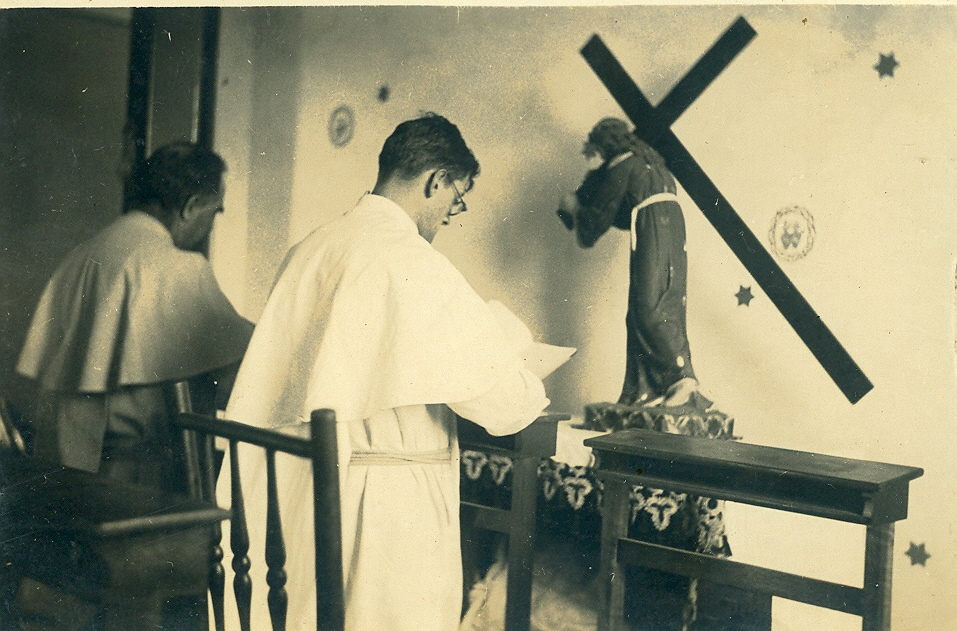
In one of his texts, Father Eustáquio reflects on the value of time and the sanctification of our work. Read the full text below:
The value of time: sanctifying our work.
Let us enter the house of Nazareth, the house of the Holy Family. We will see Mary seated at her distaff, Saint Joseph and the Son of God busy in their workshop. They work with pleasure, with the utmost seriousness. Mary weaves a strong thread, Saint Joseph delivers a perfect work on time. We should not be surprised that such holy people worked. It is good for man to occupy himself with work.
The curse of sin: "You will eat your bread by the sweat of your brow," Jesus accepted it for our love. Mary, free from sin, endured the consequences of sin.
What we admire is the human work they are doing. We search in vain for glorious deeds in the life of the Holy Family. Jesus' life, up to the age of thirty, presented nothing extraordinary. With this, He taught us that humble work will be the greatest wealth of our lives and, consequently, we who are on earth to serve God must do so through humble work. Few are those who, once in a while, accomplish something remarkable.
We often think the opposite way. We neglect small opportunities, waiting in vain for bigger things to happen..
How many times do we say: if I were rich… I would give this or that to help others, and yet we forget to give the little we have to those in need. If I were a nun, with what care and devotion I would treat the sick, and yet we pass by the door of our sick neighbors without extending a hand. If I were a nun, how I would pray behind the walls of the convent! Yet, we don't want to say our morning and evening prayers..
We desire to do things we can never do and neglect things we ought to do. Common things are the steps on the ladder that leads us to God. These are not only prayers and religious duties, as many think, but also work, walking, sleeping, eating, and drinking, according to the apostle's word. We must do everything for the greater glory of God, to save our souls. For all things, God will demand a strict accounting from us.
At the final judgment, we will not be asked if we were kings or clowns, but if we did well what we had to do, if we played our part well in the great theater of the world, not only in the church, but also outside of it. What did we do with our time? Did we waste too much time? Did we take full advantage of our time, just as a rich man takes full advantage of his money? Or did we waste time on worthless things? On foolish conversations, slander, or sinful accusations. It is necessary to understand now the value of time, because at the final judgment it will be too late. In every second of time we can enrich our soul, raise our soul from sin to God. Thus we understand that Saint Alphonsus vowed not to waste a minute of his time.
We conclude with the words of Saint Paul: “And whatever you do, whether in word or deed, do it all in the name of the Lord Jesus, giving thanks to God the Father through him.”.
***writings by Father Eustáquio taken from the archives of the Bulletin of the Parish of the Sacred Hearts, in Belo Horizonte.
 Português do Brasil
  English
  Español